Introduction
Businesses today exchange massive amounts of sensitive information every day. Financial institutions transfer ACH and payment files, healthcare organizations share patient records, retailers exchange vendor data, and enterprises move confidential reports between internal systems and external partners.
As cybersecurity threats continue to grow, organizations are under increasing pressure to protect sensitive data during transmission while maintaining compliance, uptime, and operational efficiency.
Managing secure file transfer infrastructure internally can become complex, expensive, and resource-intensive. This is why many organizations are turning to outsourced Secure File Transfer Management services.
Outsourcing secure file transfer management allows businesses to leverage:
- Specialized expertise
- Enterprise-grade security
- 24×7 operational support
without the burden of maintaining complex infrastructure internally.
What Is Secure File Transfer Management?
Secure file transfer management refers to the systems, processes, and security controls used to safely exchange files between:
- Users
- Applications
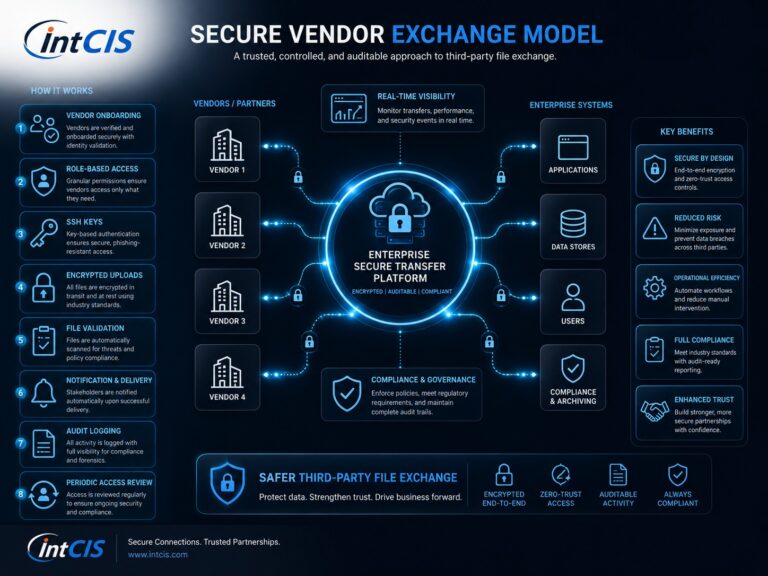
- Vendors
- Banks
- Business partners
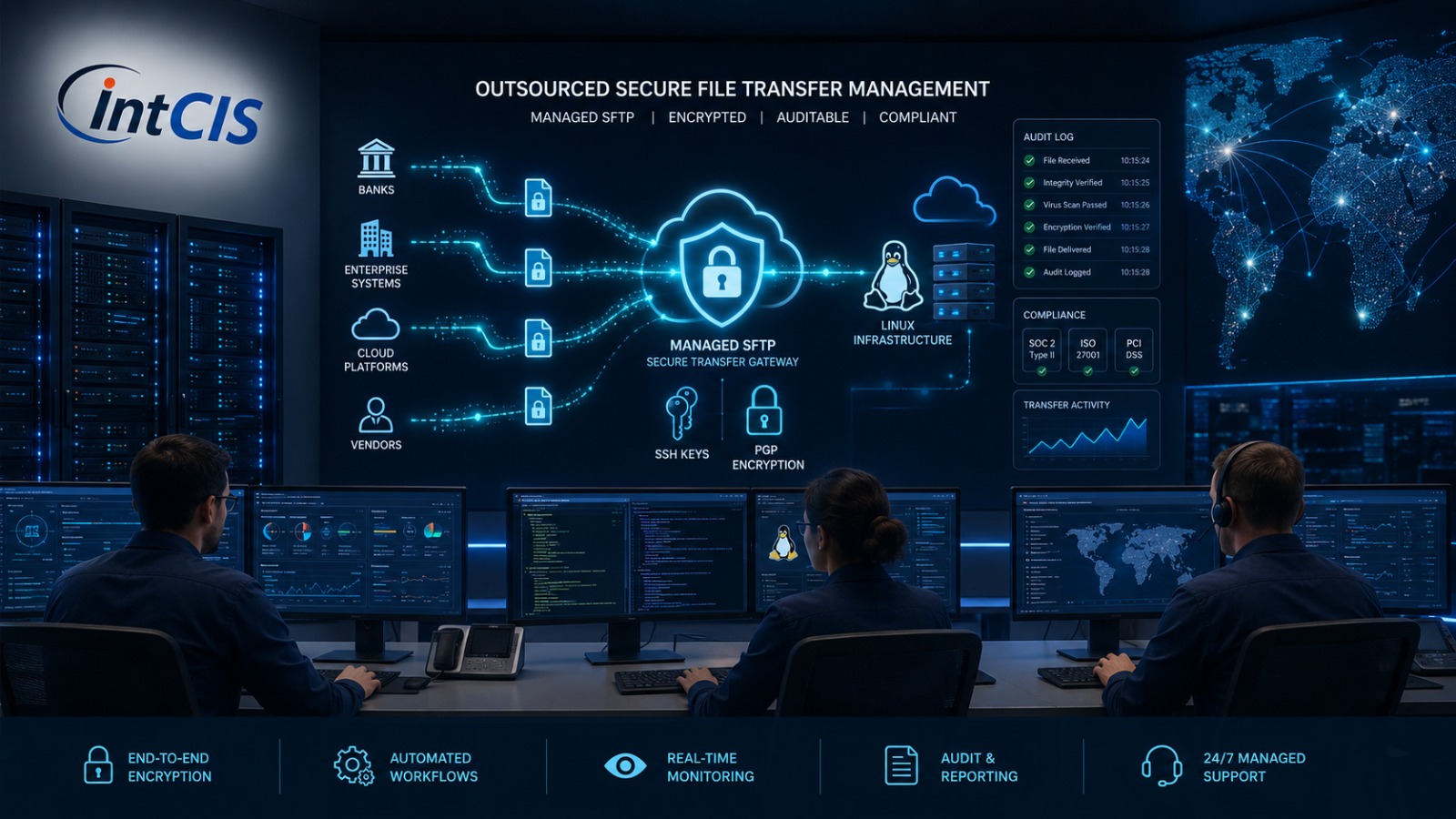
A managed secure file transfer service typically includes:
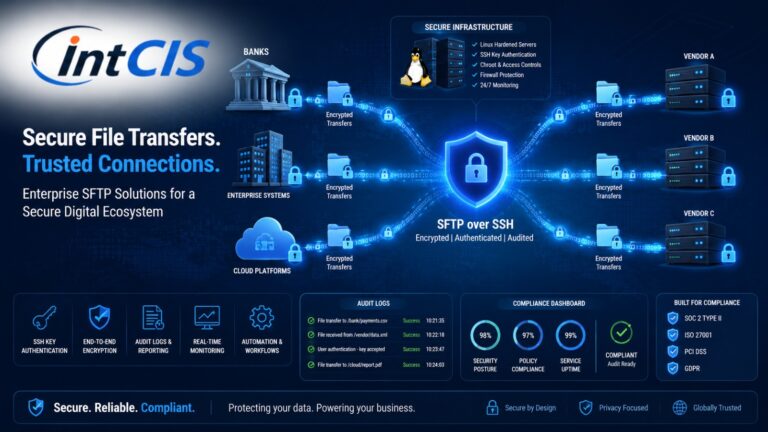
- SFTP server management
- File encryption
- SSH key authentication
- Automated file transfers
- Compliance monitoring
- Audit logging
- Backup and disaster recovery
- User access management
- File transfer monitoring and alerting
- High availability infrastructure
Instead of handling these responsibilities internally, organizations outsource them to a specialized managed service provider.
Why Businesses Are Outsourcing Secure File Transfer Services
Modern enterprises face several challenges when managing secure file transfers internally:
- Increasing cybersecurity threats
- Regulatory compliance requirements
- Limited internal IT resources
- Complex automation workflows
- Growing file transfer volumes
- Need for 24×7 availability
Outsourcing helps organizations reduce risk while improving operational efficiency.
1. Enhanced Security and Protection
One of the biggest benefits of outsourcing secure file transfer management is stronger security.
Managed service providers specialize in secure data transmission and maintain enterprise-grade security controls that many organizations struggle to implement internally.
A managed solution often includes:
- End-to-end encryption
- SSH key authentication
- PGP file encryption
- Multi-factor authentication
- Firewall protection
- Intrusion monitoring
- Secure access controls
- Security patch management
Cyberattacks targeting file transfer systems continue to increase. A vulnerable or outdated file transfer server can expose sensitive financial, healthcare, payroll, or customer data.
Managed providers continuously monitor systems and apply security updates to reduce exposure to threats.
This is especially important for:
- Banks
- Healthcare organizations
- Enterprises handling regulated data
2. Reduced Operational Burden
Managing secure file transfer infrastructure internally requires significant technical expertise and ongoing maintenance.
Internal teams must handle:
- Linux server administration
- Security patching
- User provisioning
- Backup management
- Monitoring and troubleshooting
- Certificate management
- File transfer automation
- Capacity planning
For many organizations, this creates additional workload for already stretched IT teams.
Outsourcing allows businesses to offload day-to-day management responsibilities to experts while internal staff focus on:
- Strategic initiatives
- Core business operations
This is particularly beneficial for small and medium-sized businesses that may not have dedicated SFTP or Linux administrators.
3. 24×7 Monitoring and Support
Many file transfers are business-critical and operate outside normal business hours.
Examples include:
- ACH payment processing
- Vendor order exchanges
- Treasury file transfers
- Payroll processing
- Healthcare data exchanges
- Automated batch jobs
If a transfer fails overnight, businesses may not discover the issue until the next business day, potentially causing:
- Delays
- Compliance concerns
- Operational disruptions
Managed secure file transfer providers offer:
- 24×7 monitoring
- Real-time alerts
- Incident response
- Proactive issue detection
- Performance monitoring
Continuous monitoring helps ensure files are delivered successfully and problems are addressed quickly before they impact business operations.
4. Improved Compliance and Audit Readiness
Organizations in regulated industries must comply with strict data security requirements.
Examples include:
- HIPAA
- PCI-DSS
- SOC 2
- GDPR
- NACHA
- FINRA
Maintaining compliance internally can be difficult without proper logging, monitoring, and documentation.
Managed secure file transfer providers typically include:
- Detailed audit logging
- File tracking
- Access history
- Compliance reporting
- Retention policies
- Security controls documentation
These features help organizations prepare for audits and demonstrate secure handling of sensitive data.
For financial institutions and healthcare providers, audit readiness is essential.
5. Reliable File Transfer Automation
Automation is critical for modern business operations.
Organizations often rely on automated workflows for:
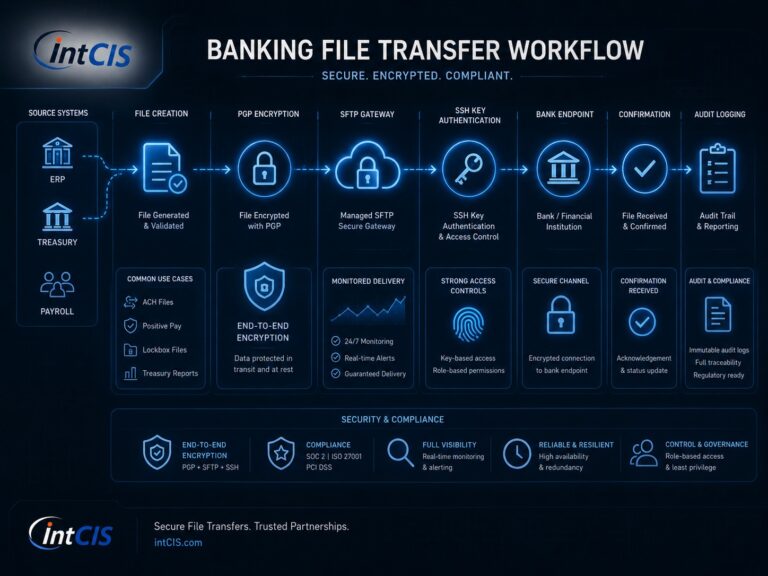
- ACH file processing
- Vendor integrations
- Daily banking operations
- Payroll processing
- Customer data synchronization
- Scheduled reporting
Manually transferring files increases the risk of:
- Delays
- Missed uploads
- Human error
Managed providers help businesses implement reliable automated workflows using:
- Scheduled SFTP jobs
- Secure APIs
- Batch automation
- Automated encryption
- Notifications and alerts
- File validation processes
Automation improves:
- Efficiency
- Consistency
- Operational reliability
6. Business Continuity and Disaster Recovery
Secure file transfer systems are often mission-critical infrastructure.
If file transfer services become unavailable, organizations may experience:
- Payment processing failures
- Vendor disruptions
- Missed deadlines
- Regulatory violations
- Customer service impacts
Managed providers typically offer:
- High availability environments
- Redundant infrastructure
- Backup systems
- Disaster recovery planning
- Failover capabilities
These services help maintain business continuity during outages, cyber incidents, or infrastructure failures.
For enterprises and financial institutions, downtime can be extremely costly.
7. Faster Deployment and Scalability
Building and managing secure file transfer infrastructure internally can take significant time and investment.
Organizations must:
- Procure servers
- Configure security settings
- Implement monitoring
- Develop automation workflows
- Test integrations
- Establish backup strategies
Managed services allow businesses to deploy secure file transfer solutions much faster.
As business needs grow, managed providers can also scale services to support:
- Increased file volumes
- Additional users
- New vendor connections
- Global business operations
- Complex integrations
This scalability supports business growth without requiring major infrastructure investments.
8. Access to Specialized Expertise
Secure file transfer management requires expertise in:
- Linux systems
- SSH and SFTP
- Encryption technologies
- Compliance requirements
- Automation scripting
- Enterprise networking
- Security monitoring
Many organizations lack in-house specialists with deep experience in these areas.
Managed providers bring experienced engineers and security professionals who understand enterprise file transfer environments and industry best practices.
This expertise helps reduce operational risks and improve system reliability.
9. Cost Savings
Managing secure file transfer infrastructure internally can become expensive.
Costs may include:
- Hardware and infrastructure
- Software licensing
- Security tools
- Staffing
- Training
- Monitoring platforms
- Backup systems
- Compliance management
Outsourcing converts many of these capital expenses into predictable operational costs.
Organizations can reduce infrastructure spending while gaining access to enterprise-grade security and support services.
Industries That Benefit Most
Industries that commonly outsource secure file transfer management include:
- Banking and financial services
- Healthcare
- Government agencies
- Insurance companies
- Manufacturing
- Retail and e-commerce
- Logistics and supply chain
- Legal and accounting firms
Any organization that exchanges confidential or regulated data can benefit from managed secure file transfer services.
Final Thoughts
Secure file transfer is no longer just an IT function — it is a critical business and cybersecurity requirement.
As threats grow and compliance requirements become stricter, organizations must ensure sensitive data is protected during transmission while maintaining operational reliability.
Outsourcing secure file transfer management provides businesses with:
- Enhanced security
- Reduced operational burden
- Compliance support
- Reliable automation
- 24×7 monitoring
- Disaster recovery capabilities
- Scalability and expert support
For many organizations, partnering with a trusted managed secure file transfer provider is the most effective way to improve security, reduce risk, and support long-term business growth.