Introduction
Financial institutions process and exchange enormous volumes of sensitive data every day. Banks, treasury departments, payroll providers, insurance companies, healthcare organizations, and enterprise finance teams rely heavily on electronic file transfers for ACH transactions, wire processing, vendor payments, treasury reporting, and operational workflows.
Because these files often contain highly confidential financial information, they are prime targets for cybercriminals.
Modern cybersecurity threats targeting financial operations include:
- Ransomware attacks
- Credential theft
- Supply chain compromise
- Insecure file transfer systems
- Insider threats
- Banking fraud
- Unauthorized data exposure
A single compromised ACH file or treasury transfer can result in:
- Financial fraud
- Compliance violations
- Operational disruption
- Regulatory penalties
- Reputational damage
To reduce these risks, financial institutions commonly implement layered security controls including:
- Secure SFTP
- SSH encryption
- PGP encryption
- Multi-factor authentication
- Audit logging
- Secure automation
Among these technologies, PGP encryption remains one of the most critical safeguards for protecting sensitive financial files during transmission and storage.
What Are PGP Encryption Best Practices for Financial Institutions?
PGP (Pretty Good Privacy) encryption is a file-level encryption technology used to protect confidential data from unauthorized access.
In simple business terms:
PGP encryption ensures financial files remain unreadable to unauthorized users, even if files are intercepted or compromised.
Banks and financial organizations use PGP encryption to secure:
- ACH files
- Treasury reports
- Positive Pay files
- Payroll transactions
- Wire transfer instructions
- Vendor payment files
- Settlement reports
PGP best practices focus on:
- Secure encryption workflows
- Strong key management
- Automation
- Access controls
- Compliance readiness
- Operational reliability
Technical Overview
PGP encryption uses:
- Public/private key cryptography
- Strong encryption algorithms
- Digital signatures
- Integrity validation
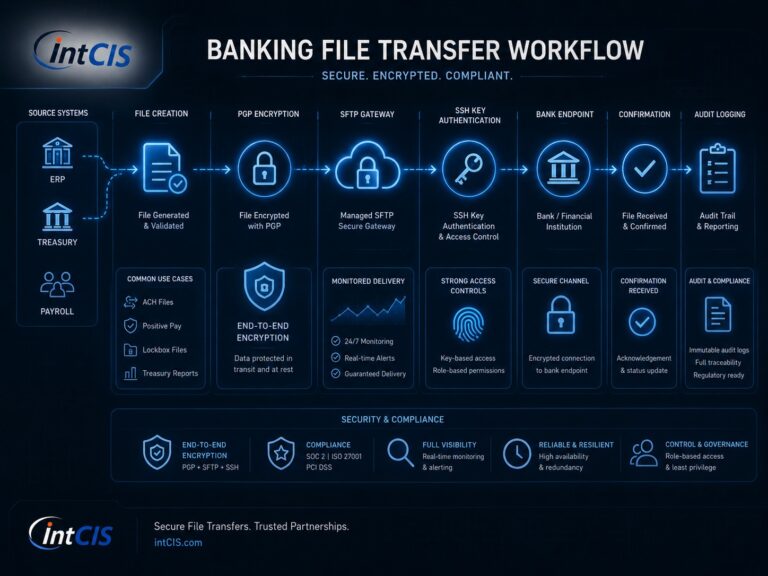
Typical Secure Workflow
- Financial systems generate files
- Files are encrypted using a recipient’s public key
- Secure SFTP transfers encrypted files
- Receiving systems decrypt files using private keys
- Audit logs validate successful delivery
This layered security model protects:
- Confidentiality
- Integrity
- Authentication
- Non-repudiation
Why Financial Institutions Need PGP Encryption Best Practices
Security Benefits
Financial files often contain:
- Bank account numbers
- Routing information
- Payroll data
- Customer records
- Treasury transactions
- Tax information
Strong encryption helps protect sensitive information even if:
- Networks are compromised
- Credentials are stolen
- Servers are breached
- Files are intercepted
Compliance Benefits
Financial organizations face strict regulatory requirements.
PGP encryption supports:
- NACHA compliance
- FFIEC guidance
- PCI-DSS requirements
- SOC 2 controls
- GDPR protections
Encryption helps demonstrate responsible cybersecurity practices.
Operational Benefits
Modern banking operations rely heavily on automation.
PGP encryption integrates with:
- Enterprise Linux systems
- ACH processing platforms
- Treasury applications
- Payroll systems
- Managed file transfer solutions
Automation improves:
- Transfer reliability
- Operational consistency
- Audit readiness
- Scalability
Scalability Advantages
Large organizations exchange files with:
- Banks
- Vendors
- Payroll providers
- Government agencies
- Cloud services
PGP encryption scales efficiently across:
- Enterprise infrastructure
- Hybrid cloud environments
- Containerized platforms
- Automated workflows
Common Risks Without Secure SFTP and PGP Encryption
FTP Vulnerabilities
Traditional FTP transfers:
- Usernames
- Passwords
- File contents
in plain text.
Attackers can intercept FTP traffic using:
- Packet sniffing
- Credential harvesting
- Network interception
Financial institutions should never use FTP for sensitive financial data.
Data Breaches
Unencrypted files may expose:
- ACH transactions
- Payroll records
- Customer banking information
- Treasury operations data
Breaches can result in:
- Fraud exposure
- Financial penalties
- Legal consequences
- Reputational damage
Ransomware Risks
Cybercriminals frequently target:
- Banking integrations
- File transfer systems
- Treasury environments
- Vendor exchange platforms
Weak file transfer security creates major attack surfaces.
Vendor and Third-Party Risks
Financial organizations often exchange files with:
- Payroll vendors
- Suppliers
- Treasury providers
- Cloud platforms
Weak third-party controls increase operational exposure.
Insider Threats
Employees or contractors with excessive access may accidentally or intentionally expose sensitive data.
Encryption and audit logging improve:
- Accountability
- Operational visibility
- Access control
- Forensic analysis
Compliance Failures
Improper file transfer security can lead to:
- NACHA violations
- FFIEC findings
- Audit failures
- Regulatory penalties
Key Features and Technologies
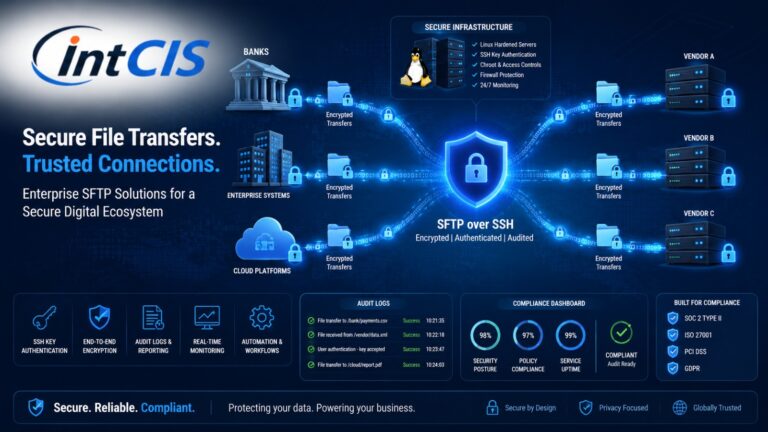
Secure SFTP
SFTP (SSH File Transfer Protocol) provides encrypted communication channels for secure file exchange.
Benefits include:
- Encrypted sessions
- Secure authentication
- Integrity validation
- Protected automation
SSH Encryption
SSH secures:
- Remote access
- File transfers
- Automated workflows
- Command execution
PGP Encryption
PGP provides file-level encryption protection beyond transport encryption.
Even if files are intercepted, the encrypted data remains unreadable without private keys.
SSH Keys
SSH key authentication improves security by reducing reliance on passwords.
Benefits:
- Stronger authentication
- Secure automation
- Reduced brute-force exposure
- Operational reliability
Multi-Factor Authentication (MFA)
MFA strengthens security through:
- Authentication apps
- Hardware tokens
- Biometric validation
- Secondary verification methods
Audit Logging
Enterprise Secure SFTP systems should log:
- File activity
- Login attempts
- Transfer status
- Encryption operations
- System alerts
Audit logging supports:
- Compliance
- Investigations
- Operational monitoring
Automation
Automation commonly uses:
- Shell scripting
- Cron jobs
- Enterprise schedulers
- Ansible
- APIs
- Managed file transfer platforms
Automation improves consistency and reduces manual errors.
Secure APIs
Modern financial systems increasingly integrate using secure APIs for:
- Treasury platforms
- ERP systems
- Payment systems
- Cloud applications
High Availability
Financial operations require:
- Redundancy
- Failover
- Clustered infrastructure
- Continuous monitoring
Disaster Recovery
Organizations should maintain:
- Encrypted backups
- Replication strategies
- Recovery automation
- Failover testing
Industry Use Cases
Banking and ACH Files
Banks commonly encrypt:
- ACH transfers
- Positive Pay files
- Wire transfer instructions
- Treasury reports
Secure automation improves financial security and operational reliability.
Healthcare and HIPAA
Healthcare organizations exchange:
- Payroll files
- Insurance claims
- Payment processing data
Encryption helps protect sensitive healthcare and financial information.
Government Agencies
Government finance departments exchange:
- Tax files
- Treasury reports
- Payroll records
- Vendor payment files
Secure workflows reduce exposure risks.
Enterprise Vendor Exchange
Large enterprises exchange files with:
- Suppliers
- Logistics providers
- Financial institutions
- Payroll processors
Automation improves consistency and security.
Payroll Processing
Payroll ACH files contain:
- Employee bank accounts
- Salaries
- Tax information
Encryption protects highly sensitive employee data.
Treasury Operations
Treasury departments rely heavily on:
- Secure bank integrations
- Automated reporting
- Encrypted file transfers
PGP encryption reduces financial operational risk.
Compliance and Security
HIPAA
Healthcare organizations must protect sensitive healthcare and financial data during transmission.
PCI-DSS
Payment environments require:
- Encryption
- Secure access controls
- Audit visibility
SOC 2
SOC 2 focuses on:
- Confidentiality
- Integrity
- Operational security
GDPR
Organizations handling EU data must implement strong data protection safeguards.
NACHA
NACHA requires secure handling of ACH-related financial information.
FFIEC
Financial institutions must implement layered cybersecurity protections for banking systems.
Audit Readiness
Managed Secure SFTP environments improve:
- Transfer traceability
- Reporting consistency
- Operational visibility
- Compliance readiness
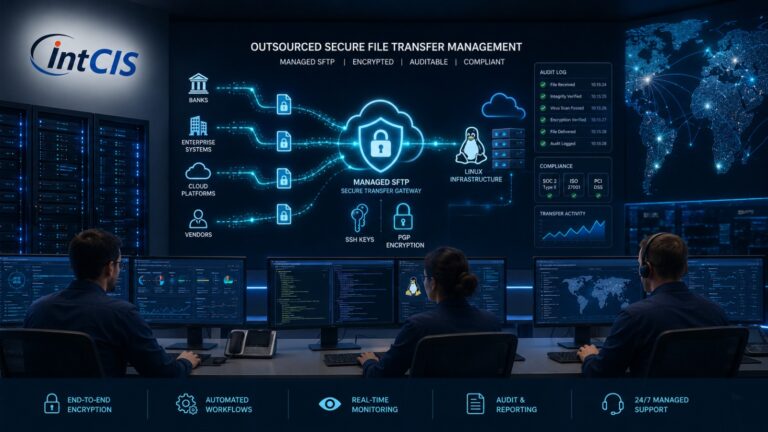
Benefits of Managed SFTP Services
Reduced Operational Burden
Managed providers handle:
- Linux administration
- Monitoring
- Patching
- Backups
- Encryption workflows
This reduces internal operational workload.
24×7 Monitoring
Continuous monitoring helps identify:
- Failed transfers
- Suspicious activity
- Unauthorized access
- Operational disruptions
Linux Expertise
Experienced Linux administrators help:
- Harden systems
- Secure banking integrations
- Optimize automation
- Troubleshoot workflows
Automation Support
Managed providers assist with:
- Scripting
- Workflow automation
- Scheduling
- Secure integrations
- API orchestration
Faster Incident Response
Rapid response minimizes:
- Downtime
- Operational delays
- Cybersecurity exposure
- Failed transfers
Better Security Posture
Managed Secure SFTP environments often include:
- Hardened Linux systems
- MFA
- Centralized logging
- Encrypted backups
- Secure key management
PGP Encryption Best Practices for Financial Institutions
Recommended Best Practices
Replace FTP with Secure SFTP
Never transmit financial data using unsecured FTP.
Encrypt All Sensitive Financial Files
Apply PGP encryption to:
- ACH files
- Payroll data
- Treasury reports
- Vendor payment files
Use SSH Key Authentication
Avoid password-only authentication.
Enable Multi-Factor Authentication
Protect privileged accounts and administrative access.
Rotate Encryption Keys Regularly
Key rotation reduces long-term exposure risks.
Harden Linux Systems
Implement:
- Least privilege access
- Firewall controls
- Patch management
- Centralized logging
Automate Encryption Workflows
Automation improves:
- Consistency
- Reliability
- Operational scalability
Maintain Detailed Audit Logs
Audit visibility supports:
- Compliance
- Investigations
- Operational monitoring
Test Disaster Recovery Procedures
Regularly validate:
- Backup recovery
- Failover processes
- Encrypted restoration workflows
Continuously Monitor File Transfer Activity
Monitor for:
- Failed transfers
- Suspicious activity
- Unusual access patterns
Why Choose a Managed Secure SFTP Provider
A trusted Secure SFTP provider delivers:
- Enterprise Linux expertise
- Banking integration support
- Compliance-ready infrastructure
- Proactive monitoring
- Secure automation
- Operational reliability
Businesses benefit from:
- Reduced cybersecurity risk
- Improved compliance readiness
- Stronger operational security
- Scalable infrastructure
- Reliable treasury operations
Specialized providers help organizations modernize legacy FTP environments while improving encryption, monitoring, and automation.
Conclusion
Financial institutions operate in one of the most heavily targeted cybersecurity environments in the world. Protecting ACH transfers, treasury files, payroll data, and financial reporting systems requires strong encryption and secure operational controls.
PGP encryption remains one of the most effective technologies for protecting sensitive financial files during transfer and storage. When combined with Secure SFTP, SSH encryption, Linux hardening, automation, and managed infrastructure services, organizations gain a secure and scalable foundation for modern financial operations.
Organizations that implement strong PGP encryption best practices improve:
- Cybersecurity resilience
- Operational efficiency
- Compliance readiness
- Business continuity
- Secure banking operations
Secure file transfer is now a critical business and cybersecurity requirement.