Introduction
Banks and financial institutions process millions of sensitive financial transactions every day. From ACH transfers and payroll deposits to Positive Pay files and treasury reports, secure data exchange plays a critical role in modern banking operations.
As cyber threats targeting financial systems continue to grow, banks must ensure that sensitive payment files are transmitted securely, reliably, and in compliance with industry regulations. This is why many financial institutions rely on Managed SFTP services for secure file transfer operations.
Managed SFTP provides banks with encrypted, monitored, and automated file transfer solutions designed specifically for handling confidential financial data.
In this article, we explore how banks use Managed SFTP for ACH and payment files, why it is important, and how it helps improve security, compliance, and operational efficiency.
What Is Managed SFTP?
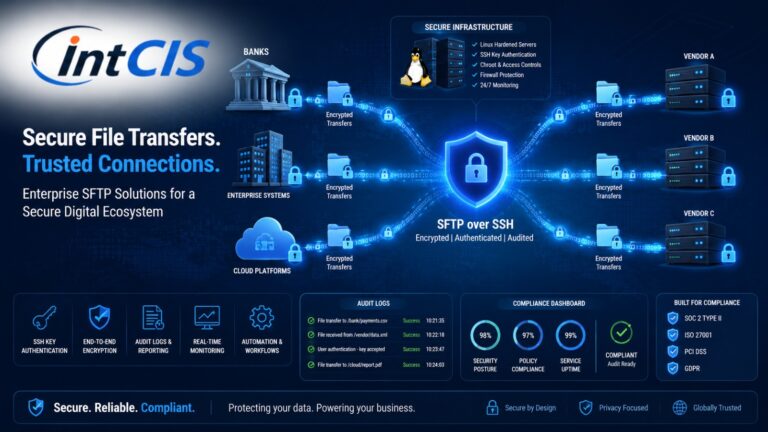
Managed SFTP (Secure File Transfer Protocol) is a secure file transfer solution that uses encrypted SSH-based communication to protect files during transmission.
Unlike traditional FTP, SFTP encrypts:
- User credentials
- Authentication sessions
- File contents
- Data transfers
A Managed SFTP provider handles the infrastructure, monitoring, security, automation, and operational management required to support secure file exchange.
Banks use Managed SFTP to securely transfer:
- ACH payment files
- Wire transfer reports
- Positive Pay files
- Lockbox data
- Treasury files
- Settlement reports
- Payroll transactions
- Vendor payment information
- Financial reporting files
Why Secure File Transfer Matters in Banking
Financial data is one of the most targeted assets in cybercrime.
If payment files are intercepted or compromised, organizations may face:
- Financial fraud
- Unauthorized transactions
- Regulatory penalties
- Data breaches
- Business disruption
- Loss of customer trust
Traditional FTP systems are no longer considered secure because they transmit data in plain text without encryption.
Banks require secure transfer methods that protect sensitive information throughout the entire transmission process.
Managed SFTP provides:
- Encrypted file transfer
- Strong authentication
- Access control
- Audit logging
- Secure automation
- Compliance support
These features make Managed SFTP a critical part of banking security infrastructure.
How Banks Use Managed SFTP for ACH Processing
ACH (Automated Clearing House) payments are widely used for:
- Payroll direct deposits
- Vendor payments
- Tax payments
- Business-to-business transactions
- Consumer billing
- Government payments
Banks and businesses exchange ACH files multiple times daily.
These files contain highly sensitive financial information such as:
- Account numbers
- Routing numbers
- Payment amounts
- Customer information
Managed SFTP helps secure ACH processing by ensuring files are encrypted and transferred safely between systems.
Typical ACH File Transfer Workflow
A common ACH workflow using Managed SFTP may include:
- A business generates an ACH payment file
- The file is automatically encrypted using PGP
- The encrypted file is transferred through SFTP
- The bank securely receives and processes the file
- Audit logs record the transfer activity
- Notifications confirm successful delivery
Automation reduces manual handling and minimizes operational risks.
Secure Transmission of Payment Files
Banks handle many types of payment-related files beyond ACH.
Examples include:
- Positive Pay files
- Check issue files
- Lockbox reports
- Treasury settlement files
- Wire transfer records
- Merchant transaction reports
These files often contain confidential financial data and require strong protection during transmission.
Managed SFTP secures payment file transfers through:
- End-to-end encryption
- SSH key authentication
- IP-based access restrictions
- Secure user management
- Multi-factor authentication
This helps prevent unauthorized access and data interception.
PGP Encryption for Financial File Security
Many banks require payment files to be encrypted before transmission using PGP (Pretty Good Privacy) encryption.
PGP encryption adds an additional layer of security by encrypting the file itself before it is transferred through SFTP.
This means:
- Even if the file is intercepted, it cannot be read without the decryption key
- Sensitive banking data remains protected
- Compliance requirements are easier to maintain
Managed SFTP providers often integrate automated PGP encryption into banking workflows.
This reduces human error and ensures files are consistently protected.
Automation Improves Banking Operations
Modern banking environments depend heavily on automation.
Banks process large volumes of files daily and cannot rely on manual file transfers.
Managed SFTP supports:
- Automated file uploads
- Scheduled transfers
- Batch processing
- Secure notifications
- File validation
- Retry mechanisms
- Workflow automation
Automation helps banks:
- Reduce operational delays
- Minimize manual errors
- Improve processing speed
- Ensure timely payment delivery
For example, payroll ACH files can be automatically transferred at scheduled times without requiring manual intervention.
Compliance and Regulatory Requirements
Banks operate under strict security and compliance regulations.
Managed SFTP helps financial institutions support requirements related to:
- NACHA
- PCI-DSS
- SOC 2
- GLBA
- FFIEC guidance
- Internal banking security policies
Compliance often requires:
- Encryption
- Secure authentication
- Audit logging
- File tracking
- Access monitoring
- Retention policies
Managed SFTP providers typically include compliance-focused features that simplify audit preparation and reporting.
Audit Logging and File Tracking
Banks require complete visibility into file transfer activity.
Managed SFTP systems provide detailed audit logs that record:
- User activity
- File uploads and downloads
- Login attempts
- Transfer timestamps
- File delivery confirmations
- Failed transfer attempts
Audit logs help banks:
- Investigate security incidents
- Monitor operational activity
- Demonstrate compliance
- Detect unauthorized access
Detailed logging is especially important during regulatory audits and security reviews.
High Availability and Business Continuity
Banking operations depend on reliable file transfer systems.
If secure file transfers fail, organizations may experience:
- Delayed payroll processing
- Missed vendor payments
- Treasury disruptions
- Compliance concerns
- Customer service impacts
Managed SFTP providers often offer:
- High availability infrastructure
- Redundant systems
- Disaster recovery planning
- Backup environments
- Real-time monitoring
These capabilities help ensure critical banking file transfers remain operational during outages or infrastructure failures.
Vendor and Third-Party File Exchange
Banks frequently exchange files with:
- Corporate customers
- Vendors
- Payment processors
- Government agencies
- Insurance companies
- Treasury departments
Managed SFTP provides secure vendor file exchange capabilities that help protect sensitive financial information during third-party communication.
Features such as:
- Role-based access
- Partner-specific directories
- File encryption
- Access restrictions
help banks maintain secure relationships with external partners.
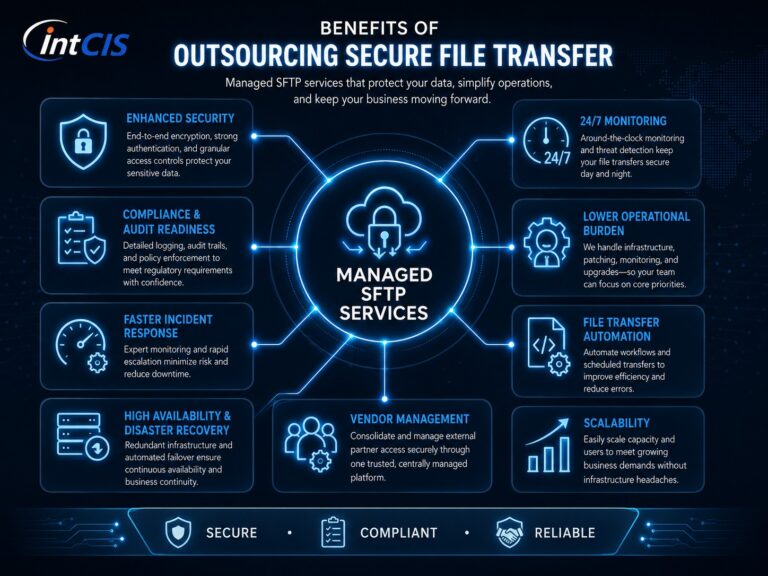
Benefits of Managed SFTP for Banks
Banks benefit from Managed SFTP in several ways.
Enhanced Security
Encryption and authentication help protect sensitive payment data.
Reduced Operational Risk
Automation minimizes human error and transfer failures.
Improved Compliance
Audit logging and monitoring support regulatory requirements.
Faster File Processing
Automated workflows improve operational efficiency.
Business Continuity
Redundant infrastructure reduces downtime risks.
Scalable Operations
Managed services can support growing transaction volumes.
Why Banks Are Moving Away from Traditional FTP
Traditional FTP systems are no longer considered secure for financial operations.
FTP lacks:
- Encryption
- Secure authentication
- Compliance support
- Modern access controls
As cybersecurity threats increase, banks are replacing outdated file transfer systems with secure managed solutions that support enterprise-grade security and operational reliability.
Final Thoughts
Secure file transfer is a critical component of modern banking operations.
From ACH processing and payroll transfers to treasury reporting and vendor file exchange, banks depend on reliable and secure file transfer systems to protect sensitive financial data.
Managed SFTP provides financial institutions with:
- Encrypted file transfer
- Secure automation
- PGP encryption
- Audit logging
- Compliance support
- High availability infrastructure
- Operational reliability
As cyber threats and regulatory requirements continue to evolve, Managed SFTP has become an essential technology for protecting ACH and payment file operations in the financial industry.
For banks and enterprises handling financial transactions, investing in secure managed file transfer solutions is no longer optional — it is a critical part of maintaining security, compliance, and business continuity.