Introduction
Organizations today rely heavily on secure file transfers to exchange sensitive information with banks, vendors, customers, healthcare providers, government agencies, and internal systems. From ACH payment files and payroll data to healthcare records and confidential business documents, file transfers are now a critical part of daily operations.
As cybersecurity threats increase and compliance requirements become stricter, businesses must decide how to manage their secure file transfer environment.
The two most common approaches are:
- Managed SFTP services
- In-house file transfer servers
Both options allow organizations to securely exchange files using encrypted protocols such as SFTP (Secure File Transfer Protocol), but they differ significantly in terms of security, cost, scalability, operational management, and long-term business impact.
In this article, we compare Managed SFTP and in-house file transfer servers to help businesses determine the best solution for their needs.
What Is Managed SFTP?
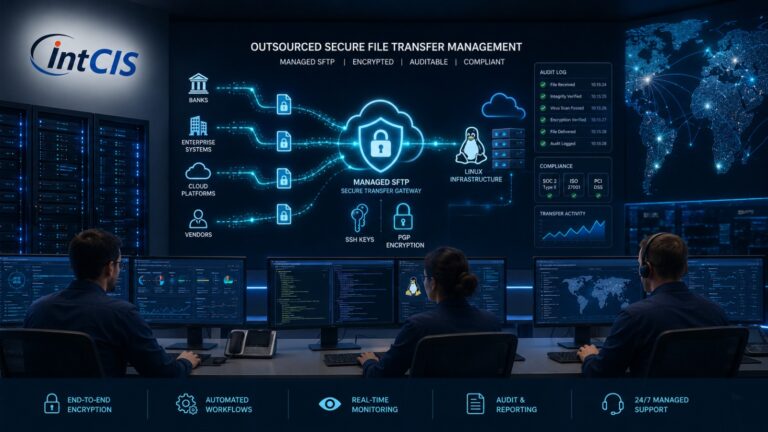
Managed SFTP is a fully managed secure file transfer service provided by a third-party specialist. The provider handles the infrastructure, security, monitoring, automation, backups, maintenance, and operational support required to run secure file transfer systems.
Managed SFTP services typically include:
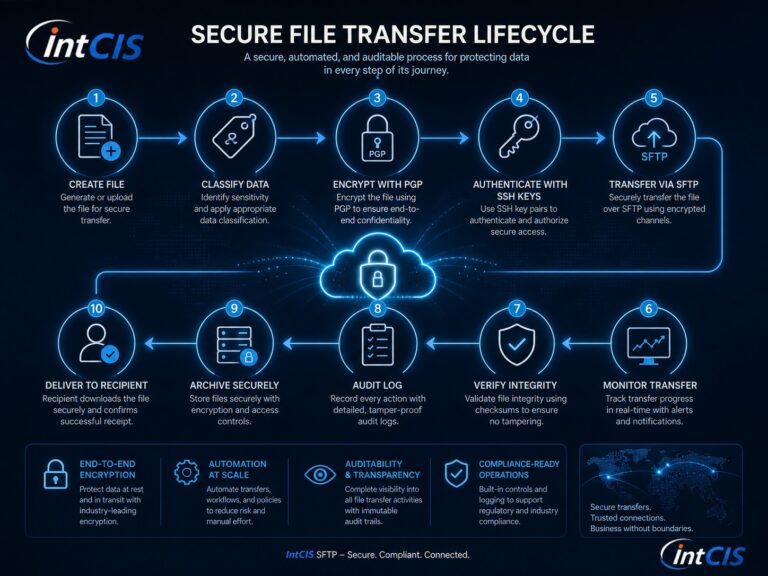
- Secure encrypted file transfers
- SSH key authentication
- PGP encryption
- Automated workflows
- 24×7 monitoring
- Compliance logging
- Backup and disaster recovery
- High availability infrastructure
- Technical support
Instead of maintaining servers internally, organizations outsource the secure file transfer environment to experts.
What Is an In-House File Transfer Server?
An in-house file transfer server is a secure file transfer system hosted and managed internally by an organization’s IT team.
The company is responsible for:
- Purchasing and maintaining servers
- Installing and configuring SFTP software
- Security hardening
- Monitoring and alerting
- User access management
- Backup management
- Compliance reporting
- Troubleshooting and incident response
Some enterprises prefer this model because it provides direct control over infrastructure and operations.
Security Comparison
Managed SFTP Advantages
Security is one of the biggest reasons organizations move to managed services.
Managed SFTP providers typically offer:
- Enterprise-grade encryption
- Continuous security monitoring
- Automated patching
- Threat detection
- SSH key management
- Multi-factor authentication
- Firewall and access controls
- Security best practices
Most managed providers specialize in secure file transfer security and maintain dedicated teams focused on protecting infrastructure against evolving cyber threats.
This is especially valuable for industries such as:
- Banking
- Healthcare
- Government
- Insurance
- Financial services
In-House Challenges
With in-house servers, security depends entirely on internal IT resources and expertise.
Organizations must:
- Monitor vulnerabilities
- Apply patches quickly
- Configure firewalls properly
- Manage authentication securely
- Maintain encryption standards
- Detect suspicious activity
If security updates are delayed or configurations are incorrect, the organization becomes vulnerable to attacks.
For smaller IT teams, maintaining enterprise-level security can be difficult.
Operational Management
Managed SFTP Benefits
Managed SFTP significantly reduces operational burden.
The provider handles:
- System monitoring
- Performance management
- Backup operations
- User onboarding
- Incident response
- Troubleshooting
- File transfer automation
- Capacity planning
This allows internal IT teams to focus on strategic projects instead of maintaining file transfer infrastructure.
Organizations also benefit from 24×7 operational support, which is important for critical business processes.
In-House Responsibilities
Managing file transfer servers internally requires dedicated operational resources.
Internal teams must monitor:
- Server health
- Disk space
- Transfer failures
- User access
- System performance
- Security logs
- Backup jobs
If a transfer fails overnight or during weekends, internal teams may not respond immediately unless they provide around-the-clock support.
For many organizations, this increases operational stress and resource requirements.
Cost Comparison
Managed SFTP Costs
Managed services usually operate on subscription-based pricing.
Costs may include:
- Monthly service fees
- Storage usage
- User licensing
- Managed support services
However, businesses avoid:
- Hardware purchases
- Infrastructure maintenance
- Security software costs
- Staffing expenses
- Disaster recovery investments
Managed SFTP often provides predictable operational costs.
In-House Costs
In-house environments require ongoing investment in:
- Servers
- Networking equipment
- Security tools
- Backup systems
- Monitoring software
- Staff training
- Data center resources
Organizations must also account for staffing costs associated with:
- Linux administrators
- Security engineers
- System monitoring
- Compliance management
For enterprises with large internal teams, in-house infrastructure may appear cost-effective initially, but long-term operational costs can become significant.
Compliance and Audit Readiness
Managed SFTP Advantages
Managed providers often include compliance-focused features such as:
- Audit logging
- File tracking
- Access reporting
- Retention policies
- Compliance monitoring
This helps organizations support requirements related to:
- HIPAA
- PCI-DSS
- SOC 2
- GDPR
- NACHA
- FINRA
Compliance reporting is often easier because managed providers already implement many required security controls.
In-House Challenges
Internal teams must build and maintain compliance processes independently.
This may require:
- Additional monitoring tools
- Manual reporting
- Custom logging systems
- Security audits
- Documentation management
Organizations without dedicated compliance teams may struggle to maintain consistent audit readiness.
Scalability and Flexibility
Managed SFTP Advantages
Managed services are designed to scale quickly.
Organizations can easily support:
- New vendors
- Additional business units
- Increased file volumes
- Global operations
- New integrations
Providers can allocate additional resources without requiring major infrastructure changes.
In-House Limitations
Scaling internal environments may require:
- Purchasing additional servers
- Expanding storage
- Reconfiguring infrastructure
- Hiring more staff
- Increasing monitoring capacity
Growth can become time-consuming and expensive.
Disaster Recovery and High Availability
Managed SFTP Benefits
Most managed providers offer:
- Redundant infrastructure
- Automated backups
- Disaster recovery planning
- Failover systems
- Geographic redundancy
These capabilities help minimize downtime during outages or cyber incidents.
In-House Challenges
Building high availability internally requires significant investment and expertise.
Organizations must maintain:
- Backup systems
- Secondary environments
- Replication technologies
- Recovery procedures
Without proper disaster recovery planning, file transfer outages can disrupt critical operations.
Which Businesses Benefit Most from Managed SFTP?
Managed SFTP is often ideal for:
- Small and medium-sized businesses
- Healthcare organizations
- Banks and financial institutions
- Government agencies
- Companies with limited IT staff
- Organizations with strict compliance requirements
It is especially beneficial for businesses that require:
- 24×7 monitoring
- Secure automation
- Compliance reporting
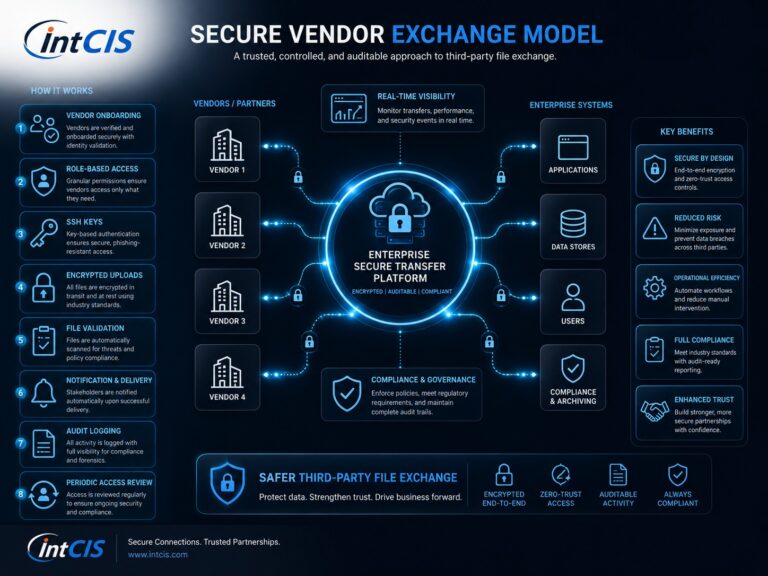
- Vendor file exchange
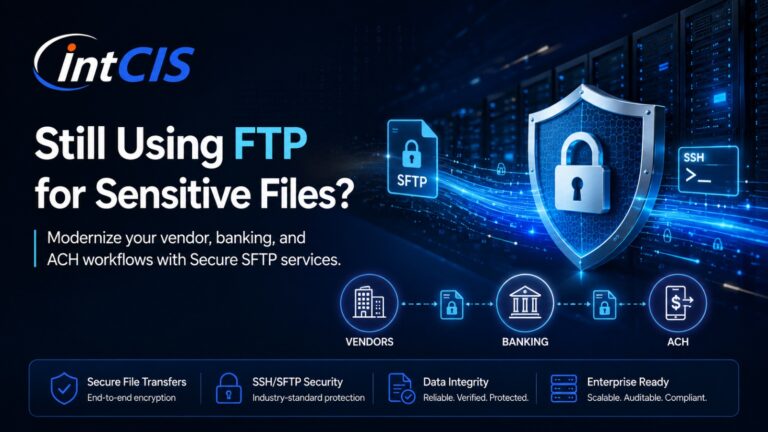
- ACH and payment file security
When In-House May Still Make Sense
Some large enterprises prefer in-house environments when they:
- Require complete infrastructure control
- Have dedicated security and Linux teams
- Operate under strict internal policies
- Maintain large private data centers
- Need highly customized environments
Organizations with mature internal infrastructure and experienced security teams may successfully manage secure file transfer systems internally.
Final Thoughts
Both Managed SFTP and in-house file transfer servers can provide secure file transfer capabilities, but the operational and security responsibilities differ significantly.
Managed SFTP offers:
- Reduced operational burden
- Stronger security management
- Faster scalability
- 24×7 monitoring
- Simplified compliance
- Lower infrastructure complexity
In-house file transfer servers provide:
- Greater direct control
- Customization flexibility
- Internal ownership of infrastructure
For many modern businesses, especially those facing growing cybersecurity threats and compliance requirements, Managed SFTP provides a more efficient, scalable, and secure approach to enterprise file transfer management.
Choosing the right solution depends on your organization’s security requirements, internal expertise, operational capacity, and long-term business goals.