Introduction
Modern businesses depend heavily on secure file transfers to support daily operations. Financial institutions exchange ACH and payment files, healthcare organizations transfer patient information, manufacturers share vendor data, and enterprises move confidential business documents between internal and external systems.
As file transfer volumes increase, organizations face growing operational risks that can impact security, compliance, uptime, customer trust, and business continuity.
A single failed file transfer can result in:
- Payment delays
- Compliance violations
- Vendor disruptions
- Data breaches
- Financial losses
- Operational downtime
To reduce these risks, many organizations are adopting Managed SFTP solutions.
Managed SFTP services provide a secure, monitored, and professionally managed environment for exchanging sensitive files while minimizing operational complexity and reducing business risk.
What Is Managed SFTP?
Managed SFTP (Secure File Transfer Protocol) is a secure file transfer service that uses encrypted SSH-based communication to safely exchange files between systems, users, vendors, customers, and business partners.
Unlike traditional FTP, SFTP protects data using encryption and secure authentication methods.
A managed service provider handles:
- SFTP server infrastructure
- Security monitoring
- User access management
- File transfer automation
- Backup and disaster recovery
- Compliance logging
- Performance monitoring
- Technical support
Instead of relying solely on internal teams, organizations outsource secure file transfer operations to specialists with expertise in enterprise security and automation.
Understanding Operational Risk in File Transfers
Operational risk refers to the possibility of business disruption caused by failed processes, human error, system outages, security vulnerabilities, or inadequate controls.
File transfer systems are often business-critical. If they fail, organizations may experience serious consequences.
Common operational risks include:
- Missed file transfers
- Unauthorized access
- Unencrypted data transmission
- Server downtime
- Failed automation jobs
- Lack of monitoring
- Human error
- Compliance failures
- Inadequate backups
- Delayed incident response
Many businesses underestimate how dependent they are on secure file transfer infrastructure until an outage or security incident occurs.
How Managed SFTP Reduces Operational Risk
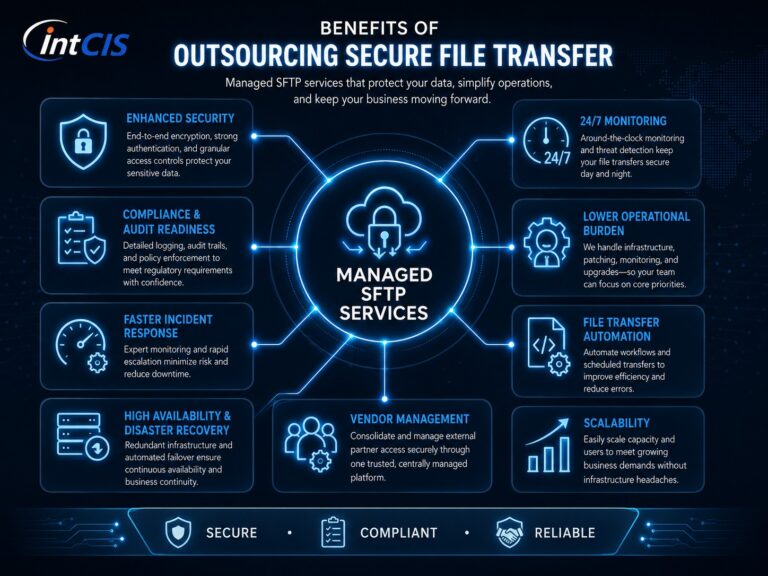
1. Enhanced Security Controls
Cybersecurity threats continue to target file transfer systems because they often handle sensitive financial and customer information.
Managed SFTP providers reduce security-related operational risk through:
- End-to-end encryption
- SSH key authentication
- Multi-factor authentication
- PGP file encryption
- Firewall protection
- Access restrictions
- Security hardening
- Continuous patch management
Traditional FTP systems transmit data in plain text, making them vulnerable to interception and unauthorized access.
Managed SFTP ensures sensitive information remains protected during transmission and storage.
This is especially important for industries such as:
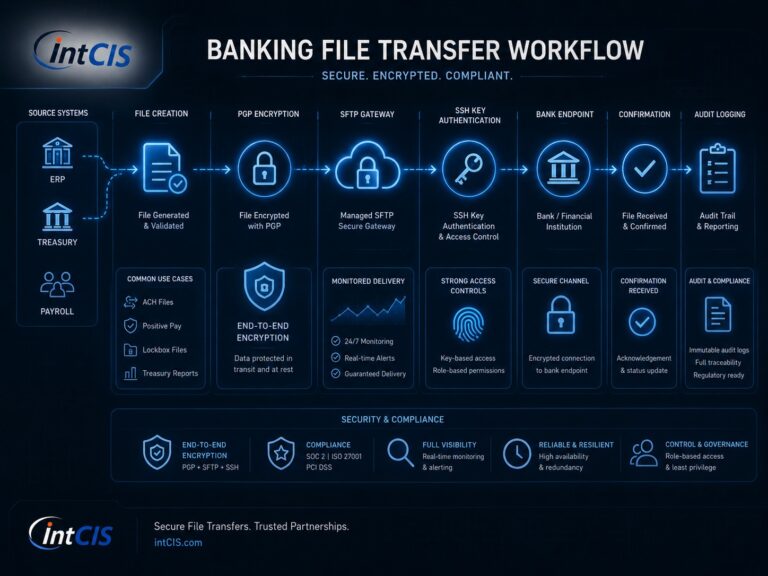
- Banking
- Healthcare
- Government
- Insurance
- Retail
- Manufacturing
2. 24×7 Monitoring and Proactive Alerting
One of the biggest operational risks is failing to detect file transfer problems quickly.
Without monitoring, organizations may not realize:
- A scheduled transfer failed
- A server is down
- A disk is full
- An automation job stopped working
- Unauthorized access occurred
Managed SFTP providers offer:
- Real-time monitoring
- Automated alerts
- Transfer validation
- Performance tracking
- Incident escalation
Continuous monitoring helps detect issues before they impact critical business operations.
For example, if an ACH payment file fails overnight, immediate alerting allows support teams to resolve the issue quickly before payment processing deadlines are missed.
3. Reduced Human Error
Manual file transfer processes increase the risk of mistakes.
Employees may:
- Upload files to the wrong location
- Transfer incorrect files
- Forget scheduled uploads
- Use insecure methods
- Misconfigure permissions
- Delete important files accidentally
Managed SFTP solutions reduce human involvement by automating workflows.
Automation features may include:
- Scheduled transfers
- Automated encryption
- File validation
- Secure scripting
- Notifications and reporting
Reducing manual processes improves consistency and lowers operational risk.
4. Improved Compliance and Audit Readiness
Many industries must comply with strict security and data protection regulations.
Examples include:
- HIPAA
- PCI-DSS
- SOC 2
- GDPR
- NACHA
- FINRA
Compliance failures can lead to:
- Financial penalties
- Legal exposure
- Reputational damage
- Audit findings
Managed SFTP providers help reduce compliance-related operational risks through:
- Detailed audit logging
- File tracking
- Access history
- Retention policies
- Security reporting
- Controlled user permissions
Organizations can demonstrate secure handling of sensitive data while improving audit readiness.
5. Reliable Backup and Disaster Recovery
Operational disruptions can occur due to:
- Hardware failures
- Cyberattacks
- Ransomware incidents
- Natural disasters
- Human error
- Data corruption
Without proper backup and recovery planning, businesses may lose critical data or experience extended downtime.
Managed SFTP providers often include:
- Automated backups
- Disaster recovery environments
- High availability systems
- Redundant infrastructure
- Failover capabilities
These features help organizations maintain business continuity even during unexpected incidents.
For banks and healthcare providers, uninterrupted file transfer operations are essential.
6. Scalable Infrastructure for Business Growth
As organizations grow, file transfer demands become more complex.
Businesses may need to support:
- More users
- Additional vendors
- Larger file volumes
- Global operations
- Multiple integrations
- Higher availability requirements
In-house infrastructure may struggle to scale efficiently.
Managed SFTP providers reduce scalability risk by offering flexible infrastructure that can adapt to changing business needs without major capital investments.
Organizations can expand operations while maintaining secure and reliable file transfer services.
7. Faster Incident Response
When file transfer issues occur, delayed response times can increase operational impact.
Examples include:
- Payment processing delays
- Missed reporting deadlines
- Vendor communication failures
- Customer service disruptions
Managed SFTP providers typically maintain dedicated support teams that respond quickly to incidents.
Benefits include:
- Faster troubleshooting
- Reduced downtime
- Proactive issue resolution
- Expert technical support
Rapid response helps minimize business disruption and operational losses.
8. Reduced Internal IT Burden
Managing secure file transfer infrastructure internally requires specialized expertise in:
- Linux systems
- SSH and SFTP
- Encryption technologies
- Security monitoring
- Compliance management
- Automation scripting
Many organizations do not have dedicated teams for file transfer management.
Managed SFTP reduces operational strain on internal IT departments by outsourcing:
- Maintenance
- Monitoring
- Security updates
- User management
- Troubleshooting
- Infrastructure planning
Internal teams can focus on strategic projects instead of maintaining complex file transfer environments.
Industries That Benefit Most from Managed SFTP
Managed SFTP is valuable across many industries, including:
- Banking and financial services
- Healthcare
- Government agencies
- Insurance companies
- Retail and e-commerce
- Logistics and supply chain
- Manufacturing
- Legal and accounting firms
Any organization that handles confidential or regulated data can benefit from reduced operational risk through managed secure file transfer services.
Common Business Use Cases
Organizations commonly use Managed SFTP for:
- ACH payment processing
- Payroll file transfers
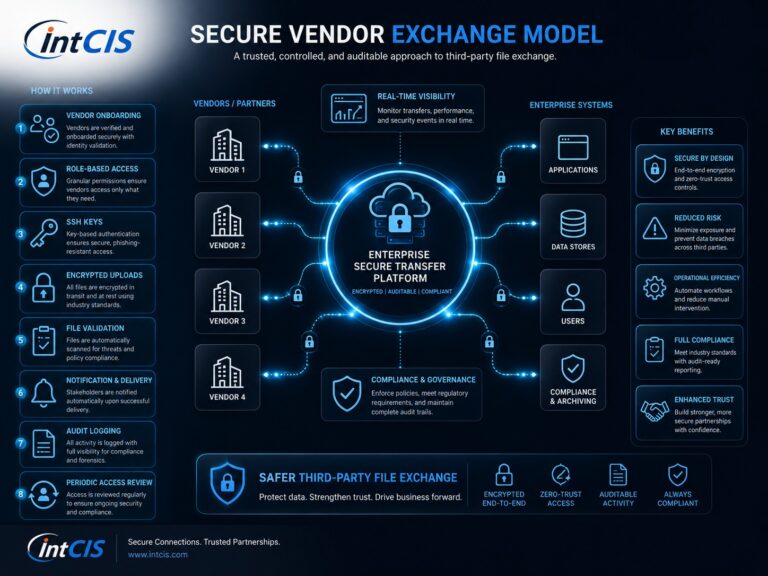
- Vendor file exchange
- Treasury operations
- Secure healthcare data exchange
- Customer data synchronization
- Automated reporting
- Supply chain integrations
These processes often require high reliability, strong security, and audit tracking.
Final Thoughts
Operational risk is a growing concern for organizations that rely on secure file transfers to support critical business processes.
Manual processes, outdated FTP systems, inadequate monitoring, and insufficient security controls can expose businesses to:
- Downtime
- Data breaches
- Compliance violations
- Financial losses
- Reputational damage
Managed SFTP provides a secure, scalable, and professionally managed solution that helps organizations reduce these operational risks while improving efficiency and reliability.
By leveraging managed secure file transfer services, businesses gain:
- Enhanced security
- Continuous monitoring
- Automation
- Compliance support
- Disaster recovery capabilities
- Expert operational support
As cybersecurity threats continue to evolve, investing in managed secure file transfer services is becoming an essential part of modern enterprise risk management and business continuity planning.