Introduction
In today’s digital business environment, organizations exchange sensitive files every day. Financial reports, ACH payment files, healthcare records, customer information, payroll data, and vendor documents are constantly moving between systems, partners, and departments. As cyber threats continue to increase, businesses can no longer rely on outdated or insecure file transfer methods.
This is where Managed SFTP services become essential.
What Is Managed SFTP?
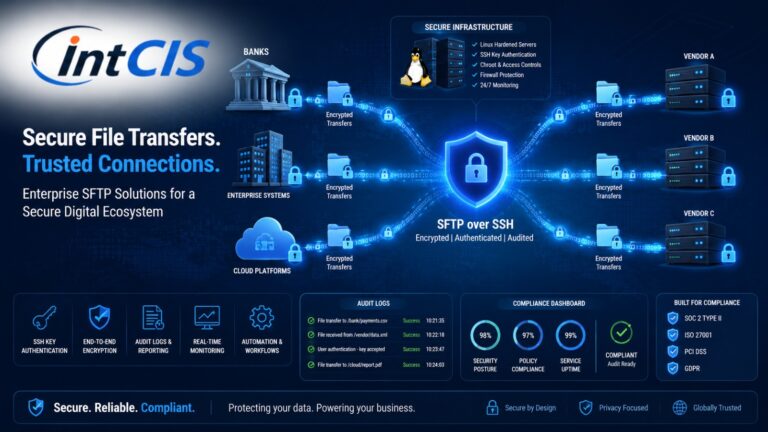
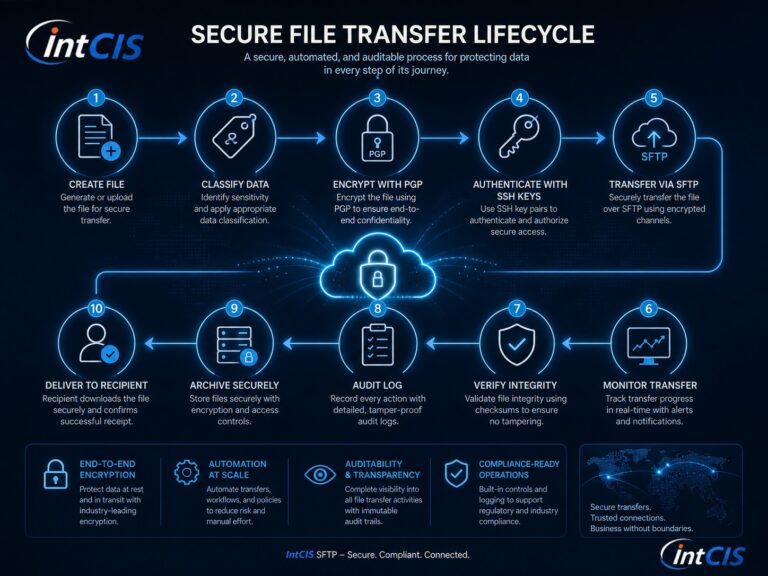
Managed SFTP (Secure File Transfer Protocol) is a professionally managed service that enables businesses to securely transfer files over encrypted connections. Unlike traditional FTP, SFTP uses SSH (Secure Shell) encryption to protect data during transmission.
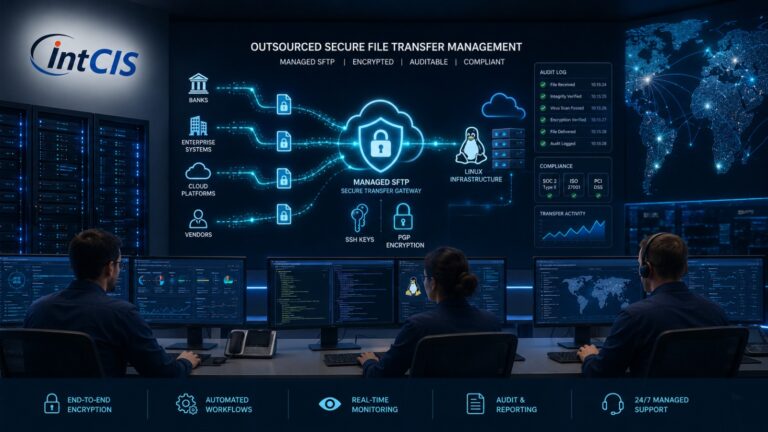
A Managed SFTP provider handles the infrastructure, monitoring, security, maintenance, backups, automation, compliance logging, and operational support required to keep file transfers secure and reliable.
Instead of managing complex SFTP servers internally, businesses can outsource the entire secure file transfer environment to experts.
Managed SFTP services typically include:
- Secure encrypted file transfer
- User authentication and SSH key management
- Automated file transfer workflows
- 24×7 monitoring and alerting
- Audit logging and compliance reporting
- Backup and disaster recovery
- High availability infrastructure
- File transfer automation
- PGP encryption integration
Why Traditional FTP Is No Longer Safe
Many organizations still use legacy FTP systems that transmit usernames, passwords, and files in plain text. This creates significant security risks.
Traditional FTP lacks:
- Encryption
- Strong authentication
- Compliance support
- Secure audit logging
- Modern access controls
Cybercriminals can intercept unsecured file transfers and gain access to sensitive business data. This is especially dangerous for industries such as banking, healthcare, insurance, and government agencies.
Managed SFTP solves these problems by providing encrypted and monitored file transfer services designed for modern security requirements.
Why Enterprises Need Managed SFTP
1. Enhanced Security
Security is the primary reason enterprises adopt Managed SFTP services.
Managed SFTP uses:
- SSH encryption
- Secure authentication
- SSH keys
- IP restrictions
- Multi-factor authentication
- File encryption using PGP
This helps protect sensitive business data from unauthorized access and cyberattacks.
For organizations handling ACH files, payment data, healthcare records, or confidential documents, encryption is critical.
2. Compliance and Audit Readiness
Many industries must comply with strict security regulations.
Managed SFTP helps organizations support compliance requirements such as:
- HIPAA
- PCI-DSS
- SOC 2
- GDPR
- NACHA
- FINRA
A managed solution includes audit logging, file tracking, access history, and reporting capabilities that help businesses prepare for audits and security reviews.
This is especially important for financial institutions and healthcare providers that must demonstrate secure handling of sensitive information.
3. Reduced Operational Burden
Managing SFTP infrastructure internally requires:
- Linux server administration
- Security patching
- Monitoring
- Backup management
- User access management
- Troubleshooting
- High availability planning
Many SMBs and enterprises do not have dedicated teams to manage secure file transfer environments around the clock.
A Managed SFTP provider reduces operational overhead by handling:
- Infrastructure management
- Security updates
- Monitoring
- Incident response
- Performance optimization
This allows internal IT teams to focus on business-critical projects instead of maintaining file transfer servers.
4. Reliable File Transfer Automation
Modern enterprises rely heavily on automated workflows.
Managed SFTP services support:
- Scheduled file transfers
- Automated uploads and downloads
- Batch processing
- Secure integrations with banking systems
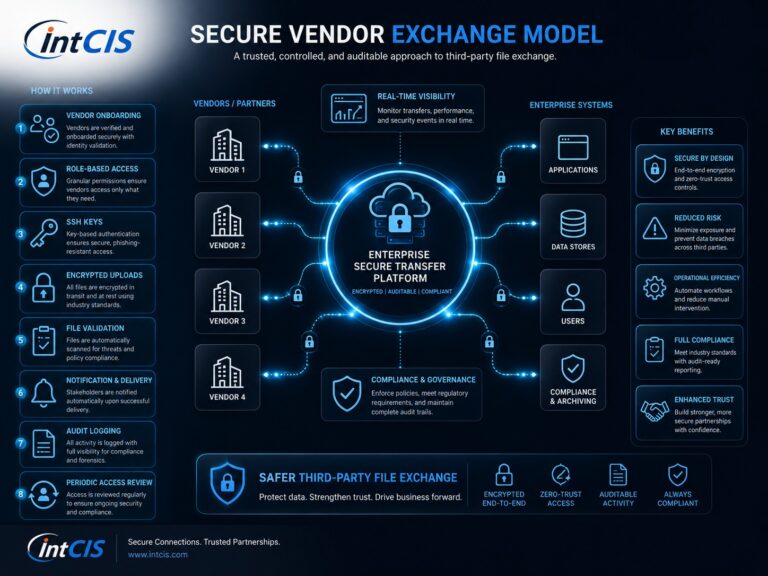
- Vendor data exchange
- Automated notifications
Automation reduces human error and ensures critical files are transferred on time.
For example, banks and finance departments often automate:
- ACH processing
- Positive Pay files
- Lockbox files
- Payroll transfers
- Treasury reporting
Reliable automation improves operational efficiency and business continuity.
5. Business Continuity and Disaster Recovery
File transfer systems are often mission-critical.
If a file transfer server fails, organizations may experience:
- Payment delays
- Vendor disruptions
- Compliance issues
- Operational downtime
Managed SFTP providers typically offer:
- Redundant infrastructure
- Backup systems
- Disaster recovery planning
- High availability environments
This ensures secure file transfers continue even during outages or infrastructure failures.
6. Scalability for Growing Businesses
As businesses grow, file transfer requirements become more complex.
Organizations may need:
- Multiple trading partners
- Vendor onboarding
- Larger file volumes
- Secure API integrations
- Global file exchange capabilities
Managed SFTP solutions can scale quickly without requiring major infrastructure investments.
This flexibility is valuable for growing SMBs and enterprises expanding their digital operations.
Industries That Benefit from Managed SFTP
Managed SFTP is widely used across industries including:
- Banking and financial services
- Healthcare
- Government agencies
- Insurance companies
- Retail and e-commerce
- Manufacturing
- Logistics and supply chain
- Legal and accounting firms
Any organization that exchanges confidential or regulated data can benefit from secure managed file transfer services.
Final Thoughts
Cybersecurity threats continue to evolve, and businesses must protect sensitive data during every stage of transmission.
Managed SFTP provides enterprises with a secure, reliable, and scalable solution for file transfers while reducing operational complexity and supporting compliance requirements.
Whether your organization handles ACH files, healthcare data, vendor documents, or confidential customer information, Managed SFTP helps ensure secure and uninterrupted business operations.
Investing in a professionally managed secure file transfer platform is no longer optional — it is a critical part of modern enterprise security strategy.